No products in the cart.
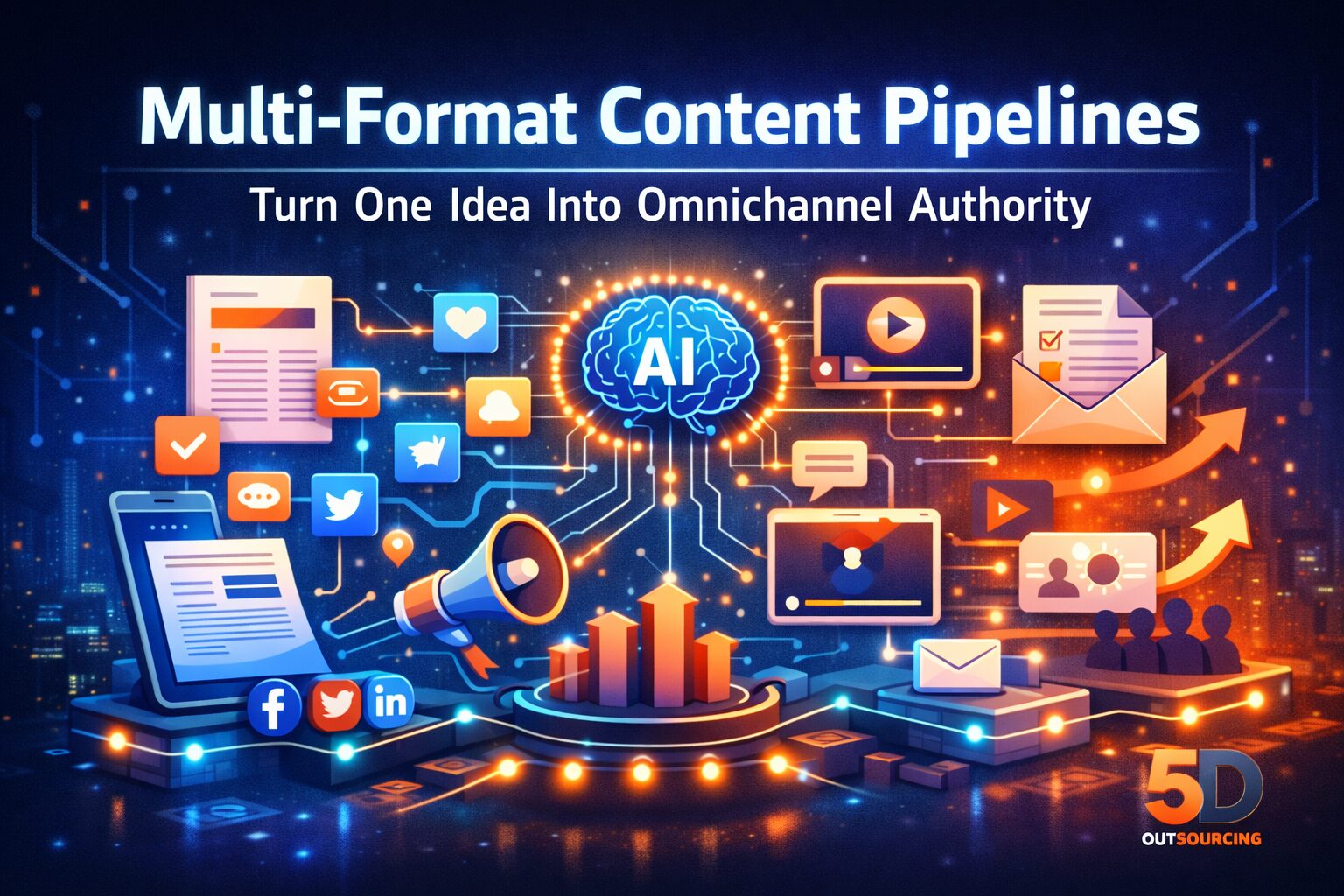
Multi-Format Content Pipelines Explained: How to Turn One Idea Into Omnichannel Authority
Multi-Format Content Pipelines Explained: How to Turn One Idea Into Omnichannel Authority
Creating one blog post and stopping there is no longer enough. In the AI search era, brands that dominate visibility use multi-format content pipelines to transform a single idea into multiple strategic assets.
This approach strengthens search authority, improves zero-click visibility, and increases brand recognition across platforms.
For businesses in Cairo, Maadi, and across Egypt, structured content pipelines are now essential for sustainable digital growth.
What Is a Multi-Format Content Pipeline?
A multi-format content pipeline is a structured system that converts one core topic into multiple content formats such as blog articles, short-form videos, social media posts, carousels, newsletters, and AI-optimized summaries.
Instead of publishing once, you distribute strategically across channels while reinforcing a single core entity.
This strategy builds on structured AI content workflows that ensure scalability and consistency.
Why Multi-Format Distribution Matters for AI SEO
AI-driven search engines analyze brand consistency across platforms. When the same topic appears in different structured formats, search systems detect:
- Topical authority
- Entity reinforcement
- Semantic consistency
- Brand trust signals
This directly supports strategies such as Generative Engine Optimization (GEO) and improves visibility in AI Overviews.
From One Idea to Multiple Assets: The 6-Step Model
1. Create the Core Pillar Article
Start with a structured, SEO-optimized article targeting a primary topic cluster. This becomes your foundation asset.
2. Extract Short Educational Clips
Turn key sections into short-form videos explaining core concepts. These support search visibility and audience trust.
3. Build Social Carousels
Convert subheadings into structured carousel posts. This improves engagement and content lifespan.
4. Develop Email Insights
Summarize insights into newsletter content that reinforces authority with existing leads.
5. Publish AI-Optimized Snippets
Reformat key answers into concise, structured summaries that increase chances of appearing in Google AI Overviews.
6. Cross-Link Strategically
Each format should link back to the pillar article and related cluster content, such as:
How Multi-Format Pipelines Strengthen Zero-Click Visibility
Zero-click search results prioritize structured, frequently reinforced entities. When your brand publishes consistent, topic-aligned content across multiple channels, AI systems increase citation probability.
Multi-format publishing is not about volume. It is about reinforcing structured authority.
Multi-Format Content for Businesses in Cairo & Egypt
Companies offering SEO services, IT solutions, HR outsourcing, or digital marketing in Egypt can multiply impact by repurposing expertise into structured formats.
For example, businesses investing in professional SEO services in Egypt can extend one article into a full growth ecosystem.
This approach builds long-term digital authority in the Egyptian market.
Common Mistakes in Content Repurposing
- Posting the same content without format adaptation
- Ignoring SEO structure in repurposed versions
- Failing to cross-link back to pillar pages
- Overproducing without strategic alignment
Structure always beats volume.
The Future of AI-Driven Content Distribution
Search engines increasingly evaluate brands as entities rather than isolated pages. Multi-format content pipelines help reinforce those entities across platforms.
In 2026 and beyond, brands that integrate AI workflows with multi-channel distribution will dominate search visibility.
One idea. Multiple formats. Stronger authority.