
No products in the cart.
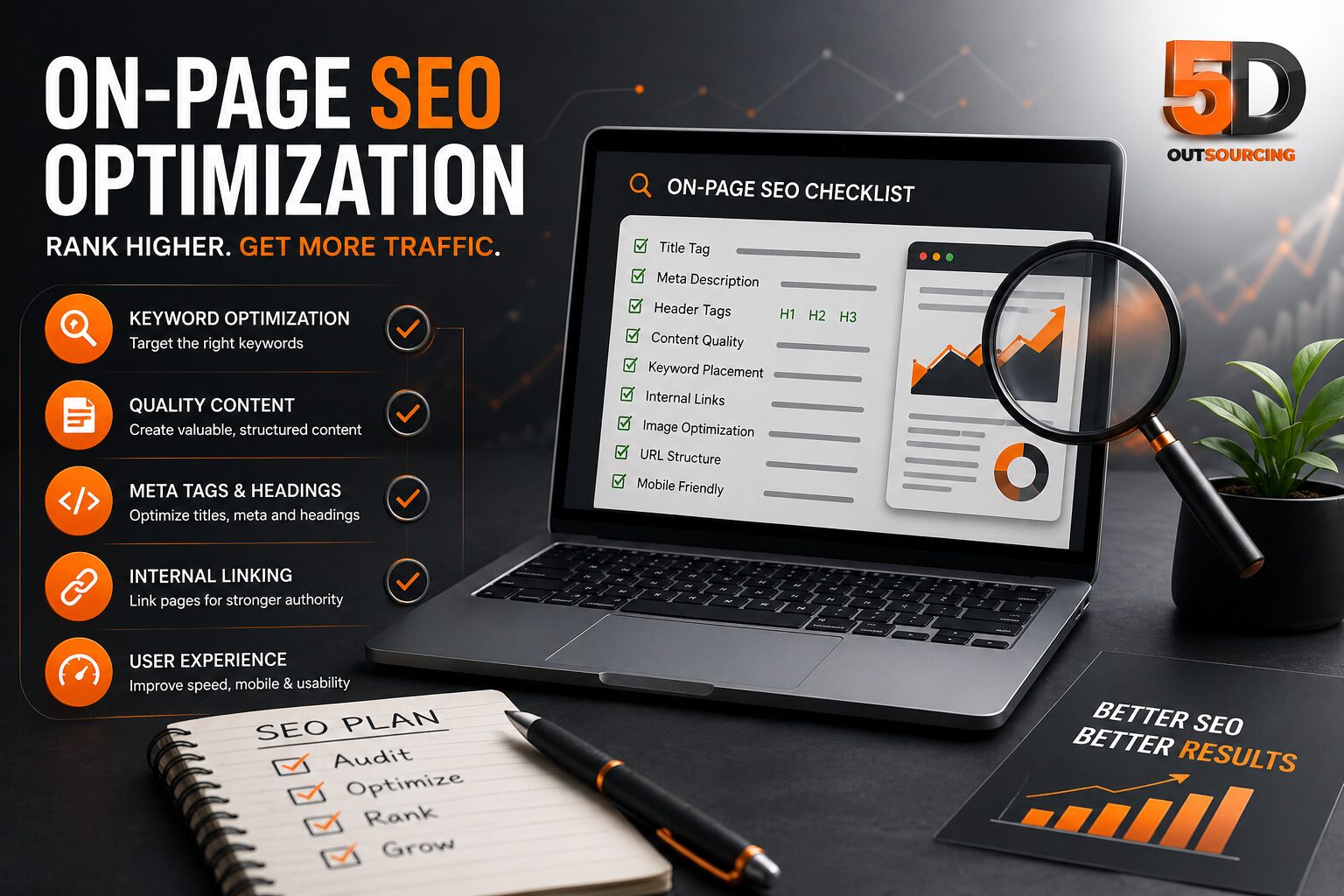
On-Page SEO Optimization: Complete Guide to Rank Higher in Google
On-page SEO optimization is one of the most critical factors in improving your website’s visibility, rankings, and organic traffic. Without proper on-page structure, even strong technical SEO and backlinks will fail to deliver consistent results.
At 5D Outsourcing, we implement on-page SEO as part of a complete performance system that aligns content, structure, and user intent to drive measurable business growth.
Explore our digital marketing services or start with our SEO services to improve your rankings.
What Is On-Page SEO Optimization?
On-page SEO refers to optimizing individual web pages to improve their search engine rankings and attract relevant traffic. It includes content optimization, HTML structure, keyword usage, and internal linking.
This is also essential for AI search systems, where content clarity and structure influence how your pages appear in search results and AI-generated answers.
1. Keyword Optimization
Every page should target a clear primary keyword supported by related terms. Proper keyword placement includes:
- Page title (H1 handled by WordPress)
- Headings (H2–H3)
- First 100 words
- Meta description
- URL structure
Keyword research should align with your overall SEO strategy to target high-value search intent.
2. Content Quality & Structure
Search engines prioritize content that is clear, relevant, and valuable to users. Your content should:
- Answer user intent directly
- Be well-structured with headings
- Include relevant examples and explanations
- Avoid thin or duplicate content
Learn how structured content impacts AI SEO in this guide on content workflows.
3. Meta Tags Optimization
Meta tags influence both rankings and click-through rates:
- Title tag: include primary keyword
- Meta description: clear value proposition
- Avoid duplication across pages
4. URL Structure
SEO-friendly URLs should be:
- Short and descriptive
- Keyword-focused
- Free from unnecessary parameters
5. Internal Linking Strategy
Internal links help search engines understand your website structure and distribute authority.
- Link related articles together
- Connect content to services and products
- Use descriptive anchor text
For example, your technical foundation should support on-page efforts, as explained in our technical SEO audit guide.
6. Image Optimization
Images should support both SEO and user experience:
- Use descriptive file names
- Add keyword-relevant alt text
- Compress images for faster loading
7. User Experience & Engagement
On-page SEO is closely tied to user behavior. Improve:
- Page readability
- Mobile responsiveness
- Content layout and design
For conversion-focused optimization, see our conversion optimization guide.
Why On-Page SEO Matters
On-page SEO directly impacts:
- Search rankings
- Organic traffic
- User engagement
- Lead generation
Without proper optimization, your website cannot compete effectively in search results.
Start Improving Your SEO Performance
On-page SEO optimization ensures your content is aligned with search engines and user intent. When done correctly, it creates a strong foundation for long-term growth and visibility.
If you want a professional SEO strategy and full website optimization, 5D Outsourcing can help you build a scalable system that delivers real results.
Leave a Reply