
No products in the cart.
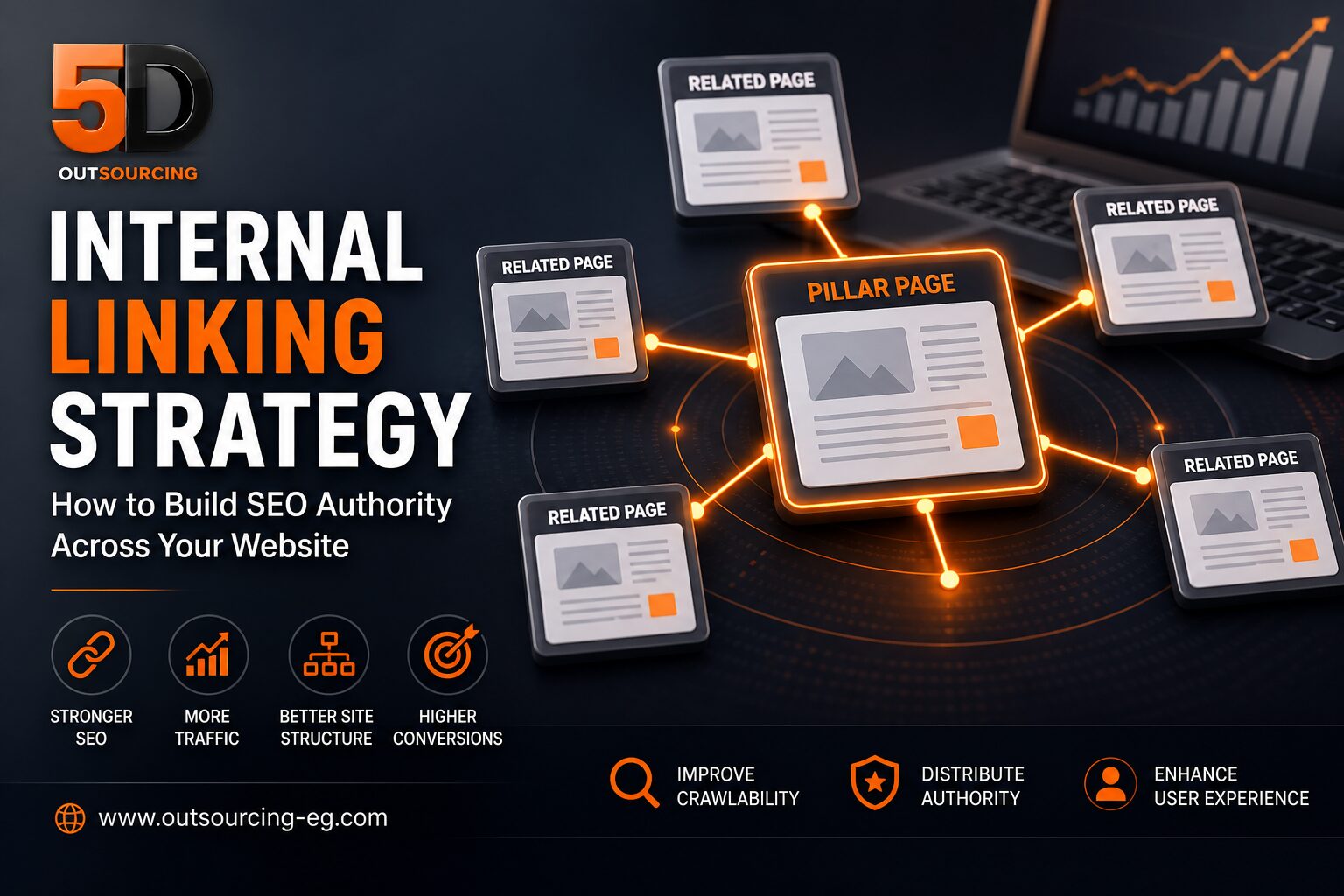
Internal Linking Strategy: How to Build SEO Authority Across Your Website
Internal linking is one of the most powerful yet underutilized SEO strategies. It helps search engines understand your website structure, distribute authority across pages, and improve rankings for your most important content.
At 5D Outsourcing, internal linking is not random—it is a structured system designed to build topical authority, improve crawlability, and support conversion-driven pages.
Explore our digital marketing services or start with our SEO services to build a scalable SEO strategy.
What Is Internal Linking in SEO?
Internal linking refers to connecting pages within your website using hyperlinks. These links guide both users and search engines through your content, helping them discover related pages and understand topic relationships.
It also plays a critical role in AI-driven search, where structured connections between pages improve how search engines interpret your content and authority.
1. Why Internal Linking Matters
- Improves website crawlability
- Distributes page authority (link equity)
- Helps search engines understand content hierarchy
- Increases user engagement and time on site
Your internal linking should always support your core SEO structure, as explained in our technical SEO audit guide.
2. Build a Clear Content Structure
A strong internal linking strategy starts with a clear structure:
- Cornerstone content (main authority pages)
- Supporting articles (cluster content)
- Service and product pages (conversion layer)
For example, your on-page optimization should connect directly with your content structure, as explained in our on-page SEO guide.
3. Use Keyword-Rich Anchor Text
Anchor text helps search engines understand what the linked page is about. Use:
- Descriptive and relevant keywords
- Avoid generic phrases like “click here”
- Match anchor text with page intent
4. Link to High-Value Pages
Not all pages are equal. Prioritize linking to:
- Service pages
- Product pages
- High-converting landing pages
For example, if you’re investing in paid campaigns like Google Ads services, your internal links should direct traffic to optimized landing pages.
5. Create Topic Clusters
Topic clusters group related content together to build authority around a subject.
- Main pillar page → links to supporting articles
- Supporting articles → link back to pillar
- All content interlinked within the cluster
This approach aligns with AI SEO strategies, as explained in AI search evolution.
6. Maintain a Logical Link Depth
Important pages should not be buried deep in your website.
- Keep key pages within 2–3 clicks from homepage
- Avoid orphan pages (no internal links)
- Ensure consistent linking across content
7. Balance User Experience and SEO
Internal linking should improve user experience, not overwhelm visitors.
- Place links naturally within content
- Avoid excessive linking
- Guide users to relevant next steps
To improve conversions alongside SEO, see our conversion optimization guide.
Why Internal Linking Is Critical for SEO Growth
Internal linking is not just about navigation—it directly impacts:
- Search rankings
- Content discoverability
- Authority distribution
- Conversion paths
Without a structured internal linking strategy, your website will struggle to scale in search visibility.
Build Your SEO Authority System
Internal linking transforms your website from a collection of pages into a connected authority system. When executed correctly, it strengthens your rankings, improves user experience, and drives consistent growth.
If you want a structured SEO system that connects content, technical SEO, and conversion strategy, 5D Outsourcing can help you build a scalable solution.
Leave a Reply