
No products in the cart.
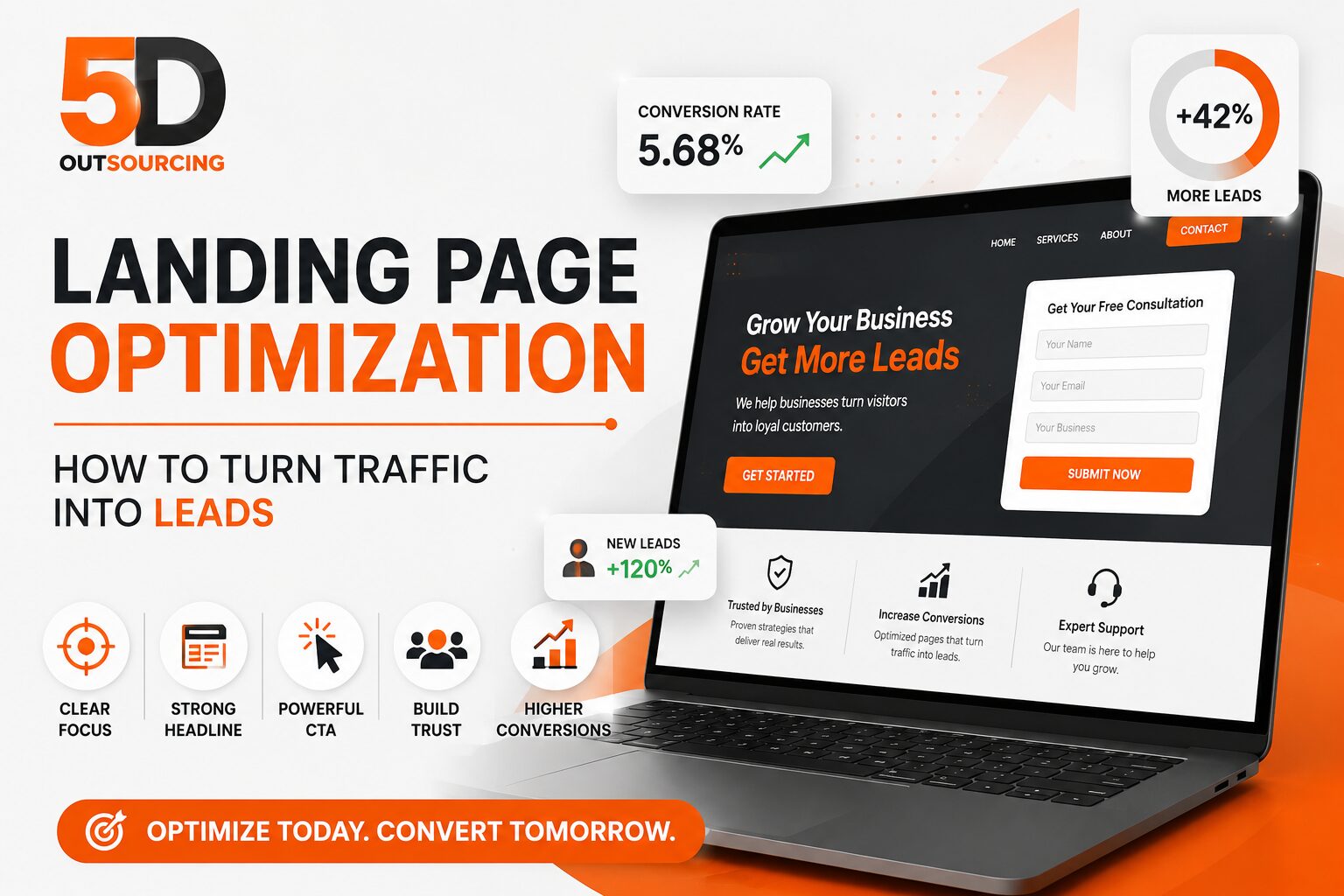
Landing Page Optimization: How to Turn Traffic Into Leads
Short answer: landing page optimization means making one page do one job well: match the visitor’s intent, show why they should trust you, and make the next step obvious and easy. Improve it by testing against your own conversion data, not by copying generic “best practices”. Last reviewed: 23 October 2026.
5D builds landing pages for organic and paid traffic. Explore our digital marketing services or Google Ads management.
What is landing page optimization?
It is the process of improving a page to raise the share of visitors who take a defined action: submit a form, call, message on WhatsApp or buy. That share is the conversion rate. It combines message, design, speed and trust, so it overlaps with conversion rate optimization and with your SEO content strategy.
What to fix, in order
1. Message match
The headline should confirm what the visitor searched for or clicked. If the ad says “SEO packages in Cairo”, the page should open with SEO packages in Cairo, not a generic company intro. Lead with the outcome for the customer, then the proof.
2. One clear action
Choose the primary action (for example WhatsApp message or form) and make it visible without scrolling and repeated after key sections. Use specific button text such as “Get a free SEO audit”. Remove links that pull visitors away from the goal. Keep the form to the fields you actually need; every extra field is a reason to leave.
3. Proof and trust
Show evidence a skeptical buyer can check: named clients with permission, measured results with dates, certifications, reviews, clear contact details and a physical address. Avoid unsourced superlatives. Our case studies show the format.
4. Clarity and structure
Explain what you offer, for whom, what it costs or how pricing works, and what happens after they enquire. Use short sections, plain language and a few visuals that show the real service. Answer the top objections in an FAQ.
5. Speed and mobile
Google’s Core Web Vitals “good” thresholds, measured at the 75th percentile of page loads, are: Largest Contentful Paint 2.5 seconds or less, Interaction to Next Paint 200 milliseconds or less, and Cumulative Layout Shift 0.1 or less. Test the landing page on a real phone and a slower connection. Fixes are covered in our technical SEO audit checklist.
6. Tracking
You cannot optimize what you do not measure. Track every conversion type, including WhatsApp clicks and calls, and record which source produced them. For WhatsApp-led businesses, count conversations and then check how many were real enquiries; the two are not the same.
How to test improvements
- Change one major element at a time (headline, offer, form, proof) so you know what worked.
- Run the test long enough to gather meaningful numbers; with low traffic, compare before and after over equal periods and treat small differences as noise.
- Judge by qualified enquiries and cost per qualified enquiry, not just form submissions.
Conclusion
Most landing pages improve by becoming clearer, faster and more credible, not more clever. Results vary by market and offer, and no one can guarantee a conversion rate. To review your pages with 5D, contact us or message us on WhatsApp. For SEO traffic to these pages, see the on-page SEO guide and how AI search is changing SEO.
Sources (accessed 23 October 2026)
- web.dev, Web Vitals (last updated 31 October 2024).