
No products in the cart.
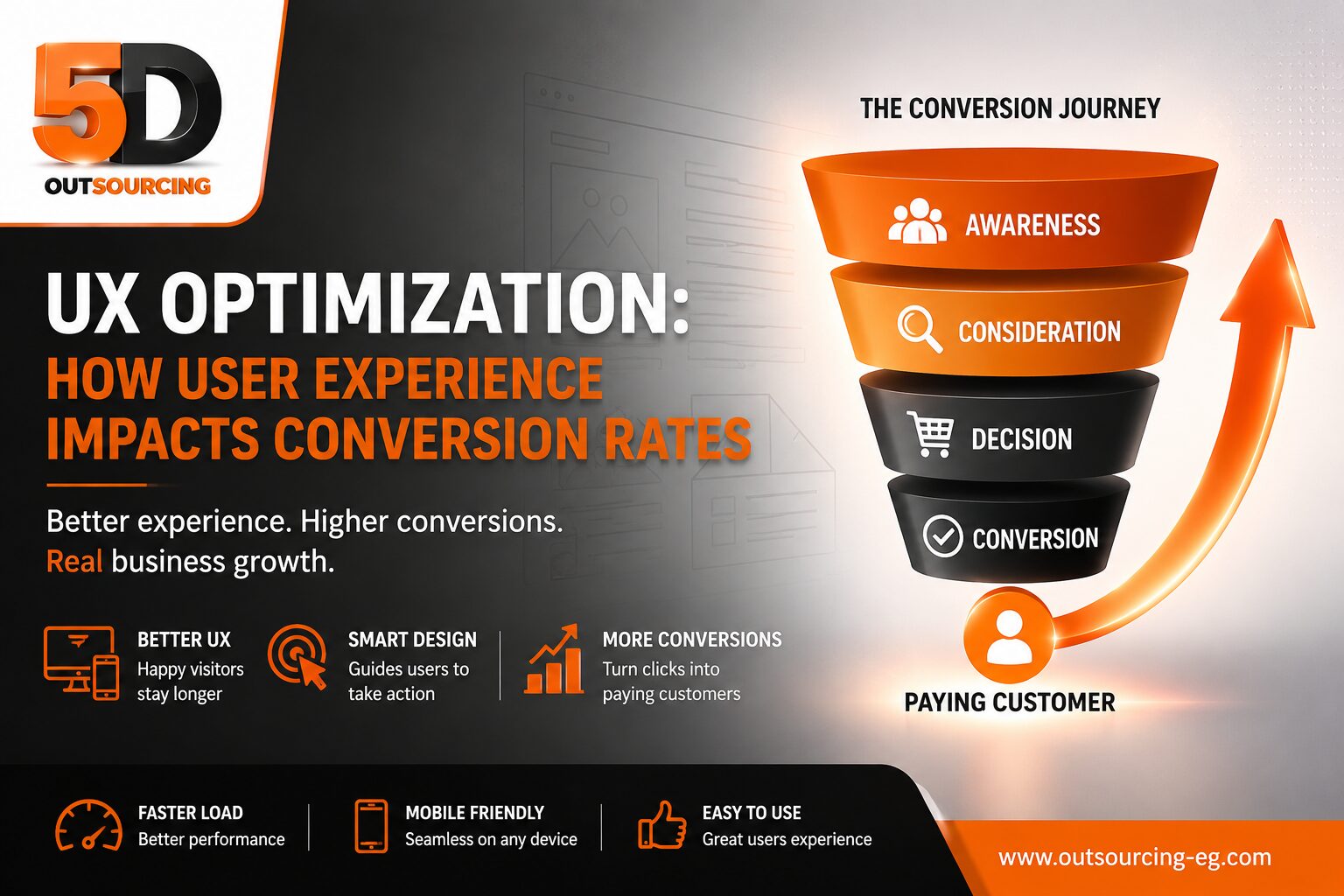
UX Optimization: How User Experience Impacts Conversion Rates
User experience (UX) has a direct impact on how visitors interact with your website. Even with strong SEO and advertising campaigns, poor user experience can reduce engagement, lower conversions, and increase bounce rates.
UX optimization focuses on improving usability, navigation, speed, and user interaction to create a seamless experience that guides visitors toward conversion.
At 5D Outsourcing, we help businesses improve website performance through UX-driven strategies designed to increase engagement and conversion rates.
Explore our digital marketing services or improve your website experience with our website design and development services.
What Is UX Optimization?
UX optimization is the process of improving how users interact with your website to create a smoother, faster, and more effective experience.
This includes:
- Website structure and navigation
- Mobile responsiveness
- Page speed optimization
- Visual hierarchy and readability
- Conversion-focused design
Why UX Matters for Conversion Rates
User experience directly affects how users behave on your website. A confusing or slow website creates friction and causes users to leave before converting.
- Better UX increases engagement
- Improved navigation reduces bounce rates
- Clear design improves conversions
- Fast loading improves user satisfaction
Even strong strategies like local SEO or landing page optimization can fail if the user experience is poor.
1. Improve Website Navigation
Users should be able to find information quickly and easily.
- Use clear menus and categories
- Reduce unnecessary clicks
- Maintain logical page structure
Strong website structure also supports internal linking strategy and SEO authority.
2. Optimize Page Speed
Page speed impacts both SEO and user experience.
- Compress images
- Reduce unnecessary scripts
- Use optimized hosting infrastructure
Technical performance should be regularly monitored using a technical SEO audit.
3. Design for Mobile Users
Most users browse on mobile devices. Your website must provide a smooth mobile experience.
- Responsive layouts
- Readable text sizes
- Touch-friendly buttons
- Fast mobile loading
4. Use Clear Calls to Action
Users should always know what action to take next.
- Use visible CTA buttons
- Keep messaging direct
- Reduce distractions around CTAs
Effective CTA placement improves the results of your conversion funnel.
5. Improve Readability and Content Structure
Content should be easy to scan and understand.
- Use headings and spacing
- Break content into sections
- Highlight important information
Well-structured content also supports on-page SEO optimization.
6. Reduce User Friction
Every unnecessary step reduces conversions.
- Simplify forms
- Reduce popups
- Minimize distractions
The goal is to make conversion as simple as possible.
7. UX Optimization and AI Search
AI-driven search systems increasingly prioritize websites that provide clear structure, accessibility, and strong user experience signals.
Learn more about this shift in AI search optimization.
Why UX Optimization Drives Business Growth
UX optimization directly impacts:
- Conversion rates
- User engagement
- Customer satisfaction
- Lead generation
- Business growth
A better user experience creates a smoother path from traffic to conversion.
Improve Your Website Experience and Conversions
Businesses that focus on UX optimization create websites that are easier to use, faster to navigate, and more effective at converting visitors into customers.
If you want to improve website performance and increase conversions, 5D Outsourcing can help you build a user-focused digital experience.
Leave a Reply