
No products in the cart.
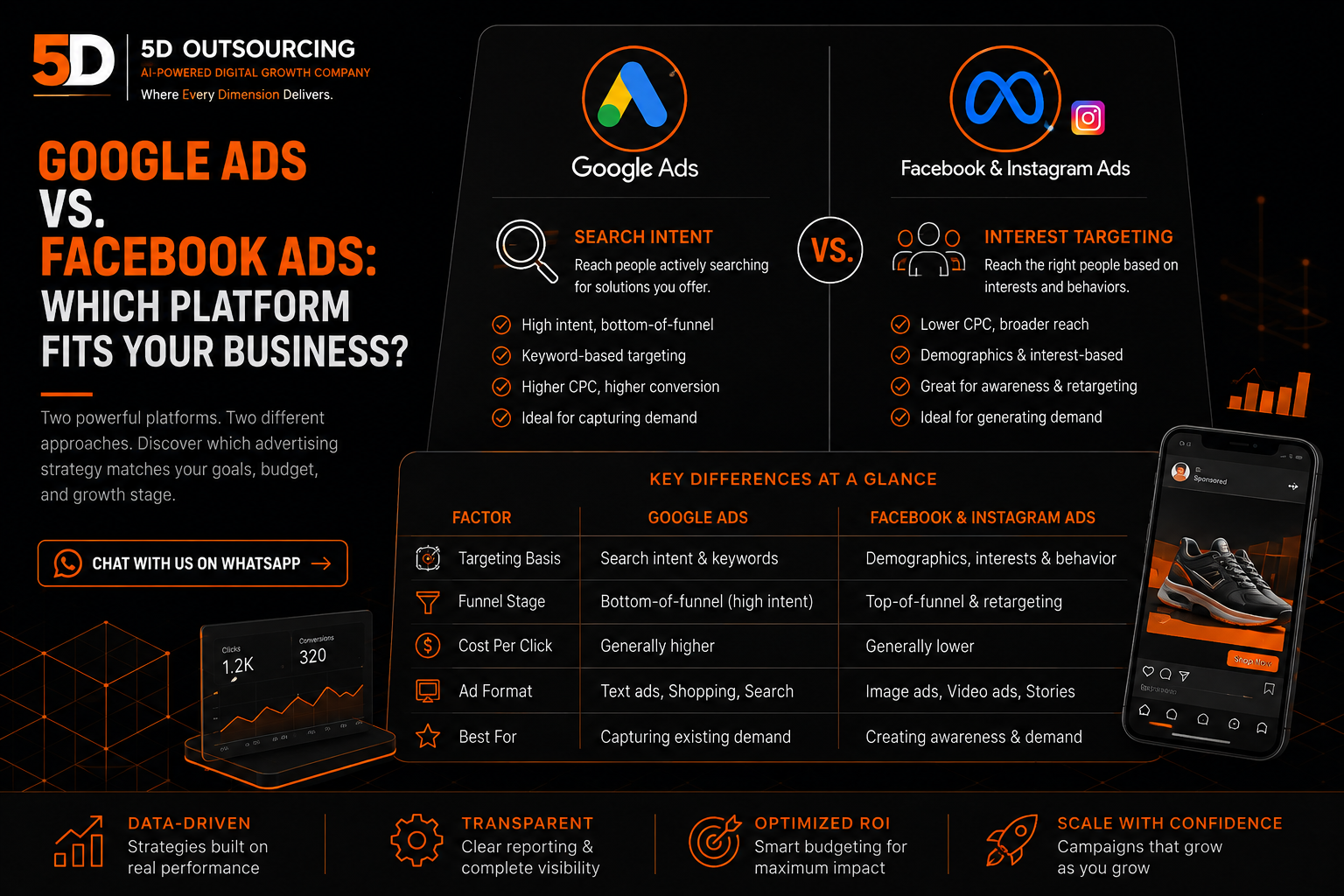
Google Ads vs. Facebook Ads: Which Platform Fits Your Business?
This is a different comparison from SEO versus social media marketing, even though the underlying intent-versus-interruption dynamic is similar. Here we’re comparing two paid advertising platforms directly — both cost money per campaign, both can generate real results, but they work through fundamentally different targeting mechanisms and are suited to different goals. This article breaks down exactly how Google Ads and Facebook Ads differ, so budget goes toward the platform that actually matches what you’re trying to achieve.
The Core Difference: Search Intent vs. Interest Targeting
Google Ads shows ads to people actively searching for something specific — they’ve typed a query because they want an answer or a solution right now. Facebook and Instagram Ads show ads to people based on demographics, interests, and behavior, regardless of whether they were actively looking for anything related to your business at that moment. Our Google Ads and PPC management services and Facebook and Instagram Ads management services cover each platform individually in depth; this article focuses on choosing between them.
How Google Ads Works
Captures existing, active intent
Someone searching “emergency plumber Cairo” or “buy running shoes online” has already decided they have a need — Google Ads’ job is being the answer they find at that exact moment, not creating the need in the first place.
Keyword-based targeting
Campaigns are built around specific search terms, giving precise control over exactly which queries trigger your ad — a fundamentally different targeting logic than audience-based platforms.
Generally higher cost-per-click, higher intent
Google Ads clicks typically cost more than Facebook Ads clicks, but the traffic tends to carry higher purchase or conversion intent, since the person clicking already expressed a specific need through their search.
Strong for bottom-of-funnel conversion
Because it captures people already looking to buy, book, or solve a problem, Google Ads tends to perform best for driving direct conversions from people close to a decision.
How Facebook and Instagram Ads Work
Reaches people based on who they are, not what they’re searching for
Facebook and Instagram Ads target based on demographics, interests, behaviors, and lookalike audiences modeled on your existing customers — reaching people who weren’t actively looking for your product but match a profile likely to be interested.
Visual, native ad formats
Image and video ads integrated into a user’s feed or stories tend to perform better on these platforms than text-based messaging, making them particularly effective for visually driven products and brand storytelling.
Generally lower cost-per-click, broader reach
Facebook and Instagram Ads typically cost less per click than Google Ads, and can reach a much larger audience for a given budget — though that traffic generally carries lower immediate purchase intent than search-driven traffic.
Strong for awareness, retargeting, and consideration-stage nurturing
These platforms excel at introducing a brand to new audiences and, particularly through retargeting, staying in front of people who’ve already shown interest but haven’t yet converted — playing a role earlier in the funnel than Google Ads typically does.
Google Ads vs. Facebook Ads: Key Differences at a Glance
- Targeting basis: Google Ads — search intent and keywords. Facebook/Instagram — demographics, interests, and behavior.
- Funnel stage: Google Ads — typically bottom-of-funnel, high intent. Facebook/Instagram — typically top-of-funnel awareness plus retargeting.
- Cost per click: Google Ads — generally higher. Facebook/Instagram — generally lower.
- Ad format: Google Ads — text, Shopping, and Search-native formats. Facebook/Instagram — image, video, and native feed/story formats.
- Best for: Google Ads — capturing existing demand. Facebook/Instagram — creating awareness and demand, and retargeting.
When Google Ads Is the Right Choice
- There’s identifiable, active search demand for what you offer — people are already typing relevant searches into Google
- You need to capture high-intent, close-to-decision traffic, particularly for transactional categories like real estate, healthcare, or e-commerce
- Your product or service solves an urgent or well-defined problem people actively search for solutions to
When Facebook and Instagram Ads Are the Right Choice
- You’re building brand awareness for a product or category people don’t yet know to search for
- Your product is visually compelling and benefits from image or video-driven storytelling
- You want to retarget website visitors or engage lookalike audiences based on existing customers
- You’re targeting a specific demographic or interest group more precisely than keyword targeting alone allows
Why Many Businesses Need Both, Working Together
These platforms often work best as complementary parts of one funnel rather than competing options. Facebook and Instagram Ads can build awareness and warm an audience through retargeting, while Google Ads captures that same audience once their interest turns into an active search — a combined approach that mirrors the SEO-and-social relationship covered in our SEO vs. social media marketing article, applied to paid channels specifically. Retargeting audiences built from Google Ads website visitors can also be re-engaged through Facebook and Instagram, creating a connected system rather than two disconnected budgets.
Industry Considerations
Transactional, high-intent categories — real estate, healthcare, and e-commerce — often see strong direct performance from Google Ads given how specifically people search within these categories. Visually driven, discovery-oriented businesses, and brands building awareness from a low starting point, often see stronger early performance from Facebook and Instagram given the platforms’ strength in audience-based targeting and creative storytelling. B2B and technical categories tend to lean more heavily on Google Ads and, where relevant, LinkedIn, given how differently professional buyers research compared to consumer audiences on Facebook and Instagram.
What This Decision Typically Costs
For a general framework on how PPC budgets and expected costs are structured, see our PPC cost guide — comparing typical cost-per-click and cost-per-conversion figures across both platforms for your specific category usually clarifies which offers the stronger initial return.
Common Mistakes When Choosing Between the Two
- Running Facebook Ads and expecting Google Ads-level immediate conversion intent from a cold, interest-based audience
- Running Google Ads for a product with no existing search demand, when awareness-building on Facebook or Instagram would be more appropriate first
- Sending traffic from either platform to a poorly optimized landing page, wasting the click regardless of platform — covered in our why ads aren’t converting guide and landing page optimization guide
- Treating the two platforms as mutually exclusive instead of connecting them into one funnel
- Not testing creative and messaging systematically — see our A/B testing guide for the framework this should follow on both platforms
Frequently Asked Questions
Which is cheaper, Google Ads or Facebook Ads?
Facebook and Instagram Ads generally have a lower cost-per-click than Google Ads, though the traffic typically carries lower immediate purchase intent, meaning cost-per-conversion can vary significantly depending on your specific offer and audience.
Should I start with Google Ads or Facebook Ads for a new business?
It depends on whether active search demand already exists for what you offer. If people are already searching, Google Ads can capture that demand directly; if you’re building awareness for something new, Facebook and Instagram Ads are often more effective first.
Can Google Ads and Facebook Ads work together?
Yes, and for many businesses this combined approach outperforms using either platform alone — Facebook and Instagram build awareness and retarget, while Google Ads captures the resulting active search intent.
Which platform is better for B2B businesses?
Google Ads generally performs better for B2B given how professional buyers research through search, though LinkedIn Ads often outperform Facebook and Instagram specifically for B2B audience targeting.
Is Facebook Ads good for direct sales, or only brand awareness?
Facebook and Instagram Ads can drive direct sales, particularly for visually compelling products and through retargeting warm audiences, but they generally perform strongest at the awareness and consideration stages rather than capturing high-intent, ready-to-buy searches the way Google Ads does.
How 5D Outsourcing Helps You Decide
5D Outsourcing manages both Google Ads and Facebook and Instagram Ads campaigns for businesses across Egypt, and we help determine the right platform mix based on your specific industry, audience, and goals rather than defaulting to one channel. This work fits within our broader digital marketing and AI Search capability, where paid channels are planned as part of one connected strategy.
Leave a Reply