
No products in the cart.
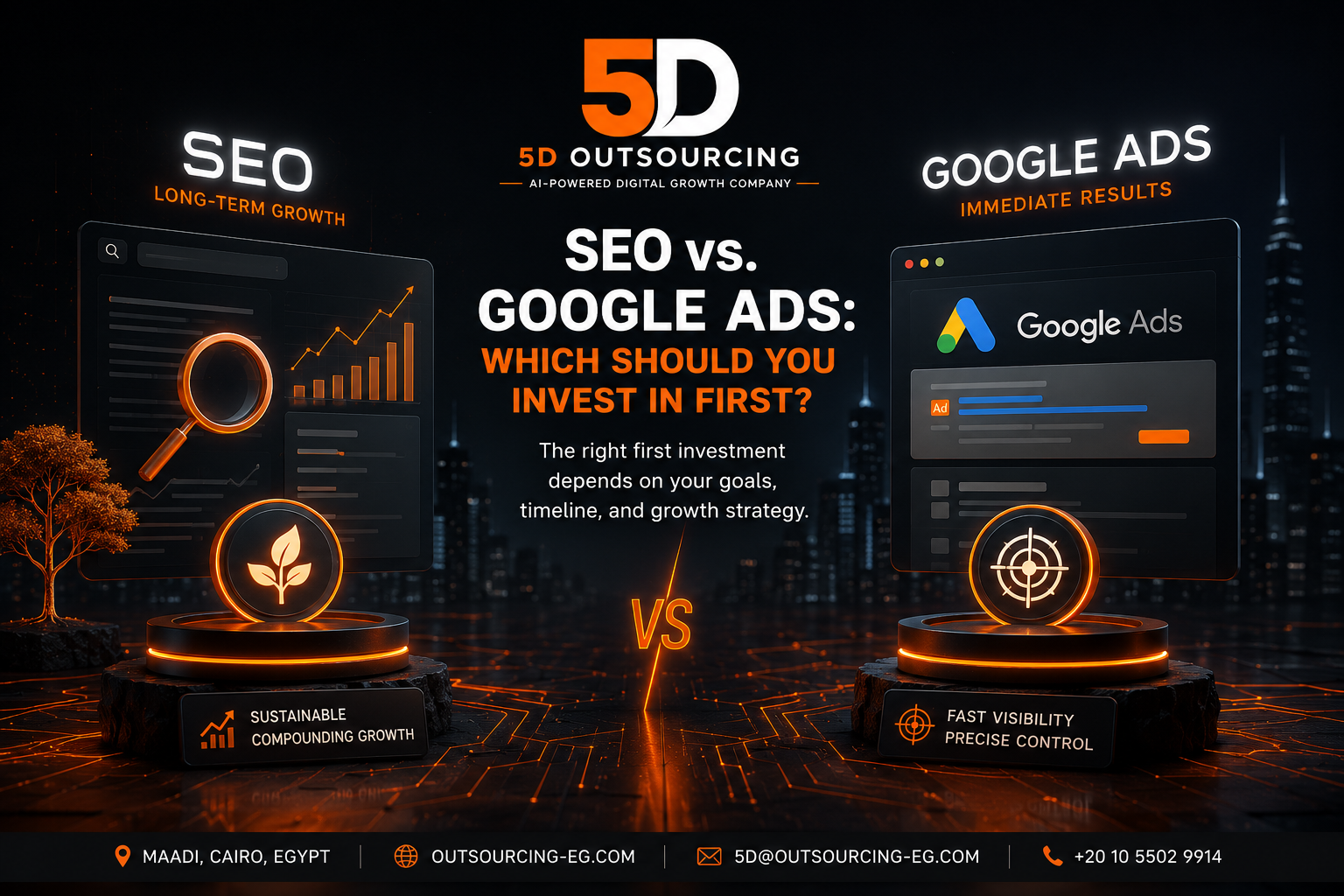
SEO vs. Google Ads: Which Should You Invest In First?
This is almost always the first real budget question a business asks once it decides to take digital marketing seriously: SEO or Google Ads? It’s a fair question, and it deserves a direct answer rather than the usual consultant non-answer of “it depends.” It genuinely does depend — but on specific, identifiable factors, not vague circumstance. This article walks through exactly what those factors are, so you can make this decision with real clarity rather than a guess.
The Real Question Behind “SEO or Google Ads?”
SEO and Google Ads aren’t competing philosophies — they’re different mechanisms with different speed, cost, and durability characteristics. The right first investment depends on how quickly you need results, how much budget you have to work with, how competitive your specific market is, and how long you’re planning to be in business. Our ultimate guide to SEO and Google Ads and PPC management services cover each channel in depth individually; this article focuses specifically on how to sequence them.
How SEO Works: Speed, Cost, and Longevity
SEO is an investment in owned, compounding visibility. You’re not paying for each individual click — you’re paying to build content, technical infrastructure, and authority that continues generating traffic long after the initial work is done.
Slower to show results
Meaningful SEO results typically take months to materialize, not days. Technical fixes, content development, and authority-building all take time to be crawled, indexed, and ranked — and competitive keywords take longer still. Anyone promising fast SEO results for a competitive term is either overpromising or cutting corners that will cause problems later.
Compounding value over time
Unlike ad spend, which stops generating traffic the moment you stop paying, SEO work continues delivering value well after it’s published — a well-ranked article or service page can generate traffic for years with only maintenance-level ongoing investment, covered in our website maintenance guide.
Lower cost per acquisition over the long run
Once content ranks, the cost of the traffic it generates approaches zero beyond ongoing maintenance — a meaningfully different economic profile than paid traffic, where every click costs money indefinitely. For a general breakdown of what SEO investment looks like, see our SEO pricing in Egypt guide.
How Google Ads Works: Speed, Cost, and Control
Google Ads is a rental, not an investment in the same sense — you get precisely controllable, immediate visibility for as long as you keep paying, and it disappears the moment you stop.
Immediate visibility
A well-built Google Ads campaign can start generating clicks and leads within days of launch — the single biggest practical advantage Google Ads holds over SEO, and often the deciding factor for businesses that need results now rather than in six months.
Precise, immediate control
Budget, targeting, messaging, and bidding can all be adjusted in real time, letting you test and refine quickly in a way SEO simply doesn’t allow — SEO changes often take weeks to show their effect, while a Google Ads adjustment shows results within days.
Cost scales directly with volume, indefinitely
Every click costs money for as long as the campaign runs, with no compounding discount over time the way SEO effectively builds one. For a general framework on what this investment looks like, see our PPC cost guide.
SEO vs. Google Ads: Key Differences at a Glance
- Time to results: Google Ads — days. SEO — months.
- Cost structure: Google Ads — ongoing, scales with clicks. SEO — upfront investment, compounding value.
- Longevity: Google Ads — stops the moment spend stops. SEO — continues generating traffic with maintenance-level investment.
- Control and testing speed: Google Ads — highly controllable, fast iteration. SEO — slower to test and see results.
- Trust signal: Organic results are often perceived as more credible than ads, particularly in trust-sensitive categories like the healthcare and legal sectors we work with.
When to Start With Google Ads First
- You need revenue soon — a new business or a business facing a genuine cash flow need can’t wait months for SEO to build momentum.
- You’re launching something time-sensitive — a seasonal promotion, a new product launch, or a limited-time offer, where SEO’s slower timeline simply doesn’t fit the window.
- You want to validate messaging and targeting quickly before committing to a longer-term content and SEO strategy — the fast feedback loop covered in our A/B testing guide is much easier to run through paid channels first.
- Your market has an established organic competitor that would take a long time to outrank organically, making paid visibility the faster path to any presence at all in the meantime.
When to Start With SEO First
- You’re playing a long game — building a business you expect to operate for years, where compounding organic visibility is worth the wait.
- Your budget is limited and needs to stretch — SEO’s lower long-term cost per acquisition matters more when there isn’t room for the indefinite spend Google Ads requires.
- You’re in a trust-sensitive category like healthcare, legal, or financial services, where organic credibility and the E-E-A-T signals covered in our healthcare SEO article matter more to the buyer than ad visibility.
- Your competitors haven’t invested in SEO yet — an underdeveloped organic landscape, common in several of the industry verticals we cover including construction and manufacturing, means less competition to overcome and a faster relative payoff.
Why “Both at Once” Is Often the Right Answer
For businesses with sufficient budget, running SEO and Google Ads simultaneously is frequently the strongest approach rather than a compromise. Google Ads generates immediate revenue and real-world data on which keywords and messaging actually convert, while SEO builds toward the point where that paid dependency can eventually be reduced. Data from PPC campaigns — which keywords convert, which landing pages perform — can directly inform SEO content priorities, and a strong organic presence alongside paid ads reinforces the overall trust and credibility of the brand, connecting to the same trust-building principles covered in our conversion funnel guide.
Budget Considerations
If budget genuinely only supports one channel initially, the decision should be driven by the factors above — urgency, category trust-sensitivity, competitive landscape, and how long you expect to be running this business — rather than which channel simply sounds more appealing. Once budget allows for both, running them together generally outperforms running either one in isolation. For specific numbers on what each channel typically costs in the Egyptian market, see our SEO pricing guide and PPC cost guide.
Industry-Specific Considerations
The right first move can vary meaningfully by industry. Real estate and e-commerce businesses, covered in our real estate and e-commerce Google Ads articles, often see fast, measurable returns from paid campaigns given how transactional the searches involved tend to be. Legal and healthcare businesses, by contrast, often benefit from prioritizing SEO and E-E-A-T-focused content earlier, given how heavily trust factors into those buying decisions. B2B categories like manufacturing and logistics tend to have longer sales cycles either way, making the SEO-versus-Ads decision less about speed and more about which channel better reaches genuinely qualified technical buyers.
Common Mistakes When Choosing Between SEO and Google Ads
- Choosing based on which channel sounds more modern or appealing rather than actual business needs
- Expecting SEO to deliver Google Ads-speed results and abandoning it too early
- Running Google Ads with no landing page optimization, wasting spend the way our why ads aren’t converting guide covers in detail
- Investing in SEO content with no technical foundation to support it, a gap covered in our why your SEO isn’t working guide
- Treating the two channels as permanently exclusive instead of revisiting the decision as budget and business needs change
Frequently Asked Questions
Is SEO cheaper than Google Ads?
Over the long run, yes — SEO’s cost per acquisition tends to decrease over time as content compounds, while Google Ads costs scale directly with click volume indefinitely. In the short term, SEO often requires more upfront investment relative to immediate return.
How long does SEO take to show results compared to Google Ads?
Google Ads can generate clicks and leads within days of launch. SEO typically takes months to show meaningful results, with timelines varying based on competition and the current state of the website.
Should a new business start with SEO or Google Ads?
Most new businesses benefit from starting with Google Ads to generate early revenue and real-world data, while building SEO in parallel for long-term, lower-cost visibility once the business has more runway.
Can you run SEO and Google Ads at the same time?
Yes, and for businesses with sufficient budget this is often the strongest approach — each channel reinforces the other, and PPC data can directly inform SEO content strategy.
Which channel is better for a trust-sensitive industry like healthcare or legal?
SEO often carries more weight in trust-sensitive categories, since organic rankings and the E-E-A-T signals behind them tend to be perceived as more credible than paid placement by buyers making a high-trust decision.
How 5D Outsourcing Helps You Decide
5D Outsourcing helps businesses across Egypt make this decision based on their actual budget, timeline, competitive landscape, and industry — not a generic recommendation. Whether the right starting point is SEO, Google Ads, or both together, this decision fits within our broader digital marketing and AI Search capability, where every channel is planned as part of one integrated growth strategy rather than a series of disconnected tactics.
Leave a Reply